

Skip to content
Send us a Text Click to Call
Lakefront Insurance Agency

507 Market Street
Osage City, KS 66523

Get Directions

Dry Lakefront Insurance Agency Blog

Get a Quote Instantly

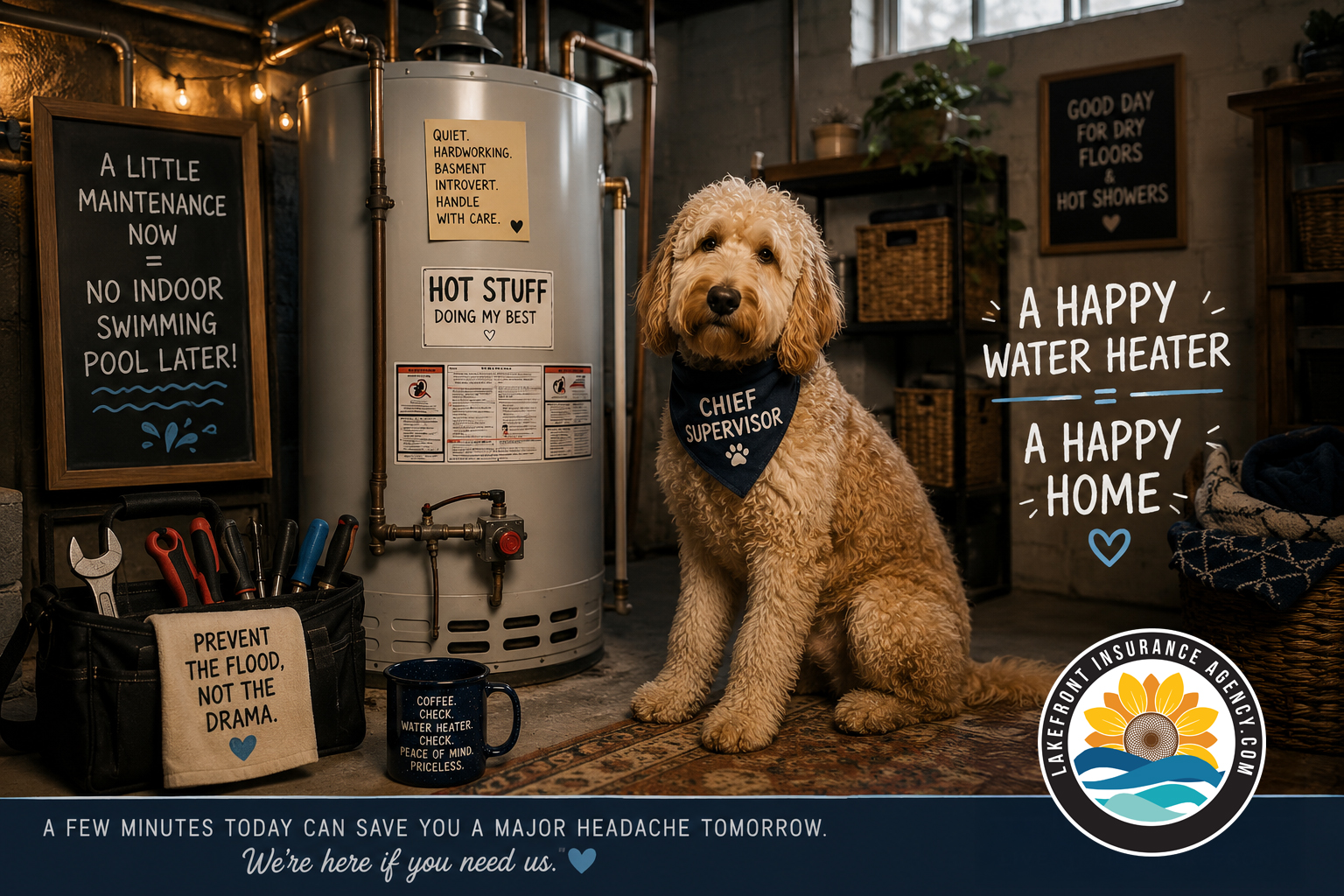
Hot Water Heaters: The Quiet Basement Introverts

Hot water heaters.
They quietly hangout in the basement and only speak up when something goes very wrong.

They spend years down there minding their business. No complaints. No warning signs anyone notices. Just faithfully heating water while the rest of the house gets all the attention.

And then one day, out of the blue… they choose chaos.

Maybe it starts with a puddle. Maybe it’s a slow leak nobody notices. Maybe it’s a full-blown basement swimming pool situation.

The good news?
A little maintenance can go a long way toward helping your water heater live a long, peaceful, non-flood-producing life.

And trust us… a little maintenance now = no indoor swimming pool later.

🚿 1. Flush Your Tank Once a Year

Over time, sediment builds up inside your water heater tank. It may not sound like a big deal, but that buildup can cause the system to work harder, overheat, rust out, and eventually weaken the tank itself.

A yearly flush helps:

  • Remove sediment buildup
  • Prevent rust and overheating
  • Extend the lifespan of the unit
  • Reduce the chance of cracks or failure

🔍 2. Check for Rust and Corrosion

Water heaters usually whisper before they scream.

If you notice rust around the tank, fittings, or water connections, your heater may be trying to tell you something. Brown or rusty-looking hot water can also be an early warning sign that corrosion is happening inside the tank.

A few things to check:

  • Rust on the tank or connections
  • Moisture or dampness around the base
  • Discolored hot water
  • Odd popping or rumbling noises

If it looks like it’s been through a few too many life crises… it probably has.

⚙️ 3. Inspect the Anode Rod

The anode rod, that little rod coming out of the top of the tank is one of the most important parts of your water heater.

Its job is to attract corrosive materials so the tank itself doesn’t rust away. Basically, it sacrifices itself for the greater good.

Most anode rods should be checked every few years and replaced roughly every 3–5 years depending on water conditions and usage.

🌡️ 4. Keep the Temperature Around 120°F

Too hot, and you put extra stress on the tank while increasing burn risks.
Too low, and bacteria can become an issue.

Around 120°F is generally considered the sweet spot:

  • Safer for households
  • Easier on the system
  • More energy efficient

A little balance goes a long way.

🚨 5. Test the Pressure Relief Valve

This small valve has one very important job: preventing pressure from building up inside the tank.

Testing it annually can help ensure it’s working properly. If the valve doesn’t release water during testing or continues leaking afterward, it may need to be replaced.

🏠 6. Know the Age of Your Water Heater

Water heaters don’t last forever. (Sad, but true.)

Most traditional water heaters last around 8–12 years. If yours is getting close to that range, it’s worth paying a little extra attention before it decides retirement should involve flooding your basement.

Sometimes replacing an aging unit proactively is far less expensive than dealing with water damage later.

💧 7. Install a Drain Pan or Leak Detector

This is one of those small upgrades that can make a huge difference.

Drain pans can help redirect water away from flooring and nearby belongings, while smart leak detectors can send alerts straight to your phone if moisture is detected.

Will Insurance Cover Water Heater Damage?

In many cases, sudden and accidental water damage from a failed water heater may be covered by a homeowner’s policy.

But slow leaks, long-term seepage, or damage caused by neglect are often a different story.

That’s why routine maintenance matters so much. Insurance is there for unexpected accidents, not slow-motion disasters that have been quietly brewing in the basement for years.

Your water heater really doesn’t ask for much.
A little attention here and there. Maybe a yearly flush. A quick inspection. A glance now and then while you’re down there switching laundry.

Give your water heater a little attention now so it doesn’t have to demand it later.

And if you’re ever unsure what your homeowner’s policy covers, the team at Lakefront Insurance is always happy to help.

Read More

☀️ Summer Toys & Smooth Sailing: What You Need to Know about Insuring Your ‘Good-Time’ Machines

Summer is pulling into the driveway! Windows down. Playlist up. Somewhere, a cooler is being packed with questionable optimism and not enough ice. And with it comes the lineup… the toys.

Boats. Jet skis. ATVs. Maybe even that camper that smells faintly like sunscreen and last year’s adventure. But before you cannonball into the season, let’s talk about the part no one really wants to talk about: making sure all those good-time machines are actually covered. Because nothing harshes a summer vibe faster than realizing your “weekend toy” comes with weekday problems.

🚤 The Boat: Your Floating Personality Trait

Pontoon, fishing boat, speedboat… whatever your flavor, your boat is more than a vessel. It’s a floating version of you. But here’s the thing: homeowners insurance doesn’t always cover boats the way people assume it does. Especially once you get beyond small, low-horsepower setups.

What to think about:

  • Liability coverage (because water + people + movement = unpredictability)
  • Physical damage (storms, docks and the “oops” moments)
  • Uninsured boaters (yep, that’s a thing)

Basically… protect your floating happy place like it matters. Because it does.

🌊 Jet Skis: Tiny Chaos Machines (In the Best Way)

Jet skis are summer in its most caffeinated form. They’re fast. They’re fun. They’re also one of the easiest ways to accidentally turn a great day into an insurance claim if something goes sideways.

Coverage matters because:

  • Accidents happen quickly
  • Injuries can get expensive
  • Not all policies automatically include them

If your jet ski could talk, it would say: “Please insure me. I make impulsive decisions.”

🌲 ATVs & Side-by-Sides: Off-Road, On-Responsibility

There’s something about dirt trails and open land that feels like freedom with a throttle. ATVs and UTVs are built for adventure… but they also live in that grey zone where people assume’ they’re covered. Spoiler: often, they’re not.

Key things to check:

  • Where you ride (your property vs. elsewhere)
  • Liability if someone gets hurt
  • Theft or damage

They’re rugged and your coverage should be too.

🏕️ Bonus Round: Campers, Golf Carts & Other Summer Sidekicks

If it moves, floats, or plugs into a campsite… there’s a good chance it probably needs its own coverage. Campers, RVs, golf carts… they all come with their own quirks and coverage needs. Think of them less like “extras” and more like supporting characters that can steal the show if something goes wrong.

🌅 The Real Vibe Check

So, here’s the truth, minus the fine print: Summer toys are about those weekend escapes from work.
Insurance is what lets you actually enjoy that freedom.

Because when you know you’re covered, you’re not halfway worrying about the “what ifs” You’re just there… in the moment… sun on your face, probably forgetting where you set your drink.

Read More

Why Choose Us?

  • No Obligation
  • Our job is to find you the best premium and policy for you, your business, or your family.
  • We’re dedicated to going above and beyond to find the best fit and ensure you’re fully protected.
  • Exceptional Service
  • We identify what really matters to you and build a policy that fits your needs. You’re more than just a number, we’re here to personally help you find an insurance policy that fits.

Servicing States

  • Arizona
  • Colorado
  • Kansas
  • Missouri
  • Nebraska
  • North Carolina
  • Ohio
  • Oklahoma
  • South Carolina

We’re proud to serve Osage County and surrounding areas including Topeka, Lawrence, Kansas City, Emporia, and more.

Reviews